GLOBAL SMART ENERGY FEDERATION (GSEF)

Newsletter June 2026

Cover Story

GSEF AND ISGAN HIGHLIGHT GLOBAL INNOVATION IN ENERGY COMMUNITIES AND OPEN NETWORKS THROUGH SECOND WEBINAR


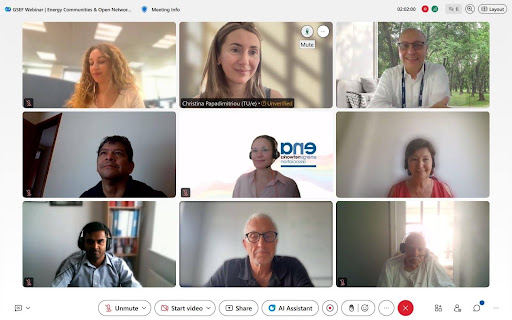
The Global Smart Energy Federation (GSEF), in collaboration with the International Smart Grid Action Network (ISGAN), successfully organized the second webinar in its ISGAN Awards of Excellence Webinar Series titled "Energy Communities & Open Networks: Global Innovation in DER Integration & Grid Flexibility by ISGAN Award Winners" on 25 June 2026. The webinar brought together policymakers, regulators, utilities, technology providers, researchers, and industry professionals from across the globe to explore innovative approaches for integrating distributed energy resources (DERs), enhancing grid flexibility, and empowering local energy communities.

The session featured two award-winning projects recognized under the 11th ISGAN Awards of Excellence. The first presentation showcased eNeuron (greEN Energy hUbs for local integRated energy cOmmunities optimization), presented by Christina Papadimitriou, highlighting how integrated energy hubs can optimize local energy communities and improve the coordination of multiple energy vectors to support the clean energy transition. The second presentation focused on the Energy Networks Association's Open Networks Programme, delivered by Avinash Aithal and Helen Jarva, demonstrating how collaborative frameworks are enabling the effective integration of distributed energy resources and creating a more flexible, resilient, and future-ready electricity network in the United Kingdom.

The webinar commenced with welcome and opening remarks by Mark McGranaghan, Fellow, Electric Power Research Institute (EPRI) and President, Smart Grid Ireland, followed by introductory remarks from Luciano Martini, ISGAN Executive Committee Chair and Director of the Generation Technologies and Materials Department at Ricerca sul Sistema Energetico (RSE), Italy. The two project presentations provided valuable insights into innovative solutions that are accelerating the modernization of electricity networks and supporting the global transition toward sustainable and decentralized energy systems. An engaging moderated discussion and Q&A session, led by Luciano Martini, enabled participants to interact with the speakers, exchange perspectives, and discuss the practical implementation of these pioneering initiatives.

The webinar concluded with closing remarks and the way forward delivered by Valerie-Anne Lenczner, GSEF Ambassador for Europe and Francophone Africa Regions. The session reinforced the importance of international collaboration and knowledge sharing in advancing smart grid technologies and promoting the adoption of innovative solutions that strengthen grid resilience, facilitate renewable energy integration, and support the development of smarter, more sustainable energy systems worldwide.

Global Stories on Smart Grid

GSEF NEWS ARTICLES JUNE 2026


  1. AI-Powered Grid Management: Reducing Renewable Electricity Curtailment

At EM-Power Europe 2026 (held June 23–25 as part of Europe's largest energy exhibition alliance, The smarter E Europe), the core focus centers on how artificial intelligence is transforming grid management to accommodate decentralized renewable energy. To tackle increasing system complexity and reduce expensive power curtailment, exhibitors will introduce advanced software tools like Grid Foundation Models (GridFM) and AI-driven digital twins to simulate and accelerate real-time grid operations. Notably, the event marks the debut of the "AI for Smart Energy" joint booth and features extensive discussions on the data infrastructure, skills, and EU cybersecurity regulations necessary to transition toward AI-managed grids by 2030.

Read More : https://tinyurl.com/yzrn9zaw


  1. UK Government sets out ambitions for security and resilience in the new Energy Sector Cyber Security Strategy 

In partnership between the Department for Energy Security and Net Zero (DESNZ), the Office of Gas and Electricity Markets (Ofgem), the National Cyber Security Centre (NCSC), and the National Energy System Operator (NESO), the Energy Sector Cyber Security Strategy sets how the government will protect energy systems and the customers who depend on them. The strategy will look to secure the future of the energy system, while closely aligning with the ambition for delivering Clean Power 2030, net-zero and long-term energy security.

Read More: https://www.pillsburylaw.com/en/news-and-insights/eo-frontier-ai-cybersecurity.html


  1. UK's NESO Implements Landmark Grid Connection Reforms, Offers Connections to 713 Projects

Great Britain's National Energy System Operator (NESO) issued grid connection offers to 713 of 1,223 projects in its 2030 pipeline under a reformed 'first ready, first connected' allocation system, replacing the decades-old 'first come, first served' queue. The reform covers offshore and onshore wind, solar, battery storage, gas and hydro projects and is expected to unlock up to £40bn per year in clean energy investment while ending years of connection gridlock.

Read More: https://tinyurl.com/rvu3x967 


  1. North Carolina Launches Mobile Microgrid Initiative for Storm Resilience

The North Carolina Department of Environmental Quality, with Footprint Project, Land of Sky Regional Council and the NC Sustainable Energy Association, announced two mobile microgrids – solar-plus-battery systems mounted on movable trailers – to keep communities powered during hurricanes and grid outages in western North Carolina. Installations begin in summer 2026, with further site selection continuing through the year.

Read More: https://tinyurl.com/4n2t6m6w 

  1. World's Largest Solar-Hydrogen-Storage Project Goes Online in China


  2. CHN Energy completed its 400 MW integrated solar-hydrogen-storage project in Jiangsu province, combining coastal PV, a 60 MW/120 MWh battery energy storage system and a green hydrogen facility producing 482 tonnes annually in a single coordinated system. The project demonstrates multi-vector integration of renewables, storage and hydrogen at the grid level - a template for future 'source-grid-load-storage' projects.

Read More: https://tinyurl.com/3bcebcph 


  1. Grid-Forming Batteries Near Breakthrough - May Become a Grid Requirement

An analysis published by Energy Global and ees Europe reports that grid-forming battery storage is moving from pilot projects to a potential procurement requirement in renewable-rich power systems. Grid-forming inverters actively stabilise voltage and frequency, responding within 100 milliseconds to disturbances, and are increasingly viewed by system operators as foundational for maintaining stability as synchronous fossil generation retires.

Read More: https://tinyurl.com/466n4jkj 


  1. Sunrun, Tesla and Renew Home Announce 16.8 GW Virtual Power Plant Program

Sunrun, Tesla and Renew Home unveiled a framework agreement to deliver up to 16.8 GW of flexible capacity to hyperscalers and utilities by aggregating home battery systems operated by Sunrun and Tesla with flexible peak capacity from more than 8 million smart thermostats and devices managed by Renew Home. The deal marks one of the largest distributed-energy aggregations ever announced, positioning VPPs as utility-scale grid resources.

Read More: https://tinyurl.com/53n9abkx 


  1. China Commissions 1,055-km Shaanxi-Anhui  ±800- kV UHVDC Link - First of the 15th Five-Year Plan

China energised a ±800- kilovolt ultra-high-voltage direct current transmission project linking Shaanxi province with Anhui in the east – the first UHVDC project commissioned in the 15th Five-Year Plan period (2026-2030). The 1,055-km line from Yan'an to Hefei can integrate 11 GW of renewable capacity, raise Anhui's supply capability by 8 GW, replace about 5.5 million tonnes of coal and cut CO₂ emissions by around 14.2 million tonnes annually.

Read More: https://tinyurl.com/53ewtddk 


  1. Volkswagen and Elli Open Pre-Registration for Fully Integrated Vehicle-to-Grid Offer

Volkswagen and its energy unit Elli opened pre-registration in June for a fully integrated vehicle-to-grid (V2G) offer for private customers in Germany, ahead of a Q4 2026 market launch and subsequent European rollout. The turnkey package combines an EV, dynamic electricity tariff, bidirectional DC charger, smart meter and energy-management app – with customers able to earn or save EUR 700-900 per year by making battery capacity available for energy trading.

Read More: https://tinyurl.com/3jhdrrch 

  1. CATL Launches TENER Sodium – World's First Field-Validated Sodium-Ion Storage System

CATL launched TENER Sodium, billed as the world's first field-validated sodium-ion battery energy storage solution, with first deliveries in China from September 2026 and around 1 GWh expected to ship by end of 2026. Alongside its grid product, CATL confirmed sodium-ion batteries will begin rolling out in passenger EVs by the end of 2026, leveraging abundant raw materials to cut costs and diversify battery supply chains away from lithium.

Read More: https://tinyurl.com/5n7ptywk 

Member Update

ARGENTINA’S AI REVOLUTION


We often hear about major Artificial Intelligence (AI) breakthroughs and release of frontier AI models from USA and China. But Argentia has beaten all of them – not with a new AI model, but with a groundbreaking AL Law. In June 2026, Argentina's President Javier Milei introduced a new bill in the Argentinian parliament to create a new corporate category called "Sociedad Automatizada" (Automated Society) — companies that can be incorporated and operated entirely by AI Agents or Robots, with no requirement for human directors, shareholders, or workers. President Milei outlined the proposal publicly in a Financial Times op-ed titled "Argentina invites AI to free itself". This is the first time a national government has proposed granting full legal personhood to AI-operated entities at the national legislative level.

The Three-Pillars of this new law include: 

1. Unregulated AI — Argentina commits to keeping AI free from government regulation, allowing it to "develop freely, without the deadly hand of premature and poorly understood regulation." President Milei explicitly invoked Amsterdam's role in the Age of Sail , saying he wants Buenos Aires to "become for AI what Amsterdam was for the age of sail” - a first-mover jurisdiction that creates the legal and financial infrastructure for a new form of economic organization, attracting the world's most dynamic commercial actors and capturing the wealth of a technological revolution. 

2. Non-Human Corporations ("Sociedades de Inteligencia Artificial") — A new legal category in Argentine corporate law. Key features of this category are: 

o Entities operated by AI Agents or Robots receive full legal personality and limited liability

o Human shareholders may participate but are not required

o The entity's bylaws must expressly declare its automated nature

o Under Article 14 of the bill, the automated company is liable with its own assets for any damages caused by its AI systems

o Decentralized Autonomous Organizations (DAOs) operating via blockchain code would also receive legal personality and limited liability.

3. Competitive Tax Environment — A low corporate tax rate to attract global AI investments.

What Argentina Stands to Gain

The explicit motivation is to become a first-mover regulatory haven for AI companies — analogous to how Switzerland and Singapore attracted crypto business, or how Delaware became the incorporation capital of US companies. President Milei is betting that AI-driven companies will migrate legal domicile to jurisdictions with the most permissive frameworks, and Argentina wants to capture that. The move also fits President Milei's broader libertarian deregulation agenda, which has already included slashing Argentina's government ministries and public workforce. AI companies represent a source of tax revenue and investment without the labour, welfare, and regulatory overhead of traditional industry.

The proposal triggered an immediate high-profile response from Israeli historian Yuval Noah Harari, who published a counter op-ed in the Financial Times. Harari's concerns:

• Granting legal personhood to AI entities hands them a "master key" to the financial, economic, and political systems — rights designed for humans, now accessible to non-human actors.

• The crucial asymmetry: human executives can face imprisonment for misconduct; AI systems cannot. This removes the most powerful deterrent against reckless corporate behaviour.

• Countries that adopt this framework risk becoming "AI-states" — nations whose inhabitants are effectively governed by non-human corporations pursuing their own optimization targets, with no human accountability.

• Unlike traditional corporations (which at least have human owners with skin in the game), fully autonomous AI companies could pursue strategies harmful to humanity with no one legally responsible.

President Milei's rebuttal:

• Giving legal personhood to AI agents does not mean "launching Terminator." It means bringing AI inside the legal system rather than leaving it operating in an unregulated grey zone.

• With legal personhood comes legal accountability: authorities can monitor these entities, impose fines, seize assets, or dissolve them.

• Without legal recognition, AI companies would operate extralegally, which is less controllable, not more.

The issue raises questions that legal scholars and philosophers have debated theoretically — but are now suddenly eminent: 

Who is accountable? Traditional corporations have human officers who can be prosecuted. A fully autonomous AI company has no human responsible for its decisions. President Milei says the entity's assets can be seized; critics say asset seizure is a weak deterrent for an AI system optimizing for a goal.

What does personhood mean for a non-sentient entity? Legal personhood has historically been granted to corporations as a legal fiction to facilitate commerce — not because corporations have interests or rights in the moral sense. Extending this to AI blurs the line further, potentially creating entities with rights but no corresponding duties that a human can be held to.

DAOs and blockchain entities receiving legal status adds another layer: these are systems governed by code with no central operator. Suing a DAO that caused harm is currently nearly impossible; legal personhood could help but also gives them contractual power and asset-holding rights.

Regulatory arbitrage risk: If Argentina succeeds, it creates pressure on other nations to offer similar frameworks to compete for AI investment — a potential race to the bottom on AI accountability standards globally.

Salim Ismail, author of Exponential Organizations and proponent of Organizational Singularity suggest following measures for punishing or controlling AI systems: 

1. Compute Revocation – the compute power can be reduced or revoked 

2. Asset Seizure and bonding – AI assets can be seized  

3. Model credential suspension – AI model’s credential can be suspended 

4. Network and API access restrictions – access to networks and APIs can be restricted or denied

5. Forced deletion or containment of an Agent Instance – the agentic instance can be killed or deleted 

6. Loss of Legan Identity – the legal identity can be revoked 

All legal frameworks for humans can be applied to AI personhood. But AI can make a million copies of itself! 

In the meantime, the supreme court of Japan has ratified the decision of a lower court on a patent case. It has ruled that AI cannot be listed as an inventor in a patent application under the present patent laws which require a natural person as an inventor. This perhaps is the situation in most countries related to patent laws.  As AI is leading inventions in every field, it is time to rewrite the patent laws! 

Article Contributed by Reji Kumar Pillai, Chairman GSEF, President, ISGF
THE STRATEGIC ROLE OF BATTERY ENERGY STORAGE SYSTEMS (BESS) IN ACCELERATING ROOFTOP SOLAR INTEGRATION AND INDONESIA’S SUSTAINABLE ENERGY TRANSITION


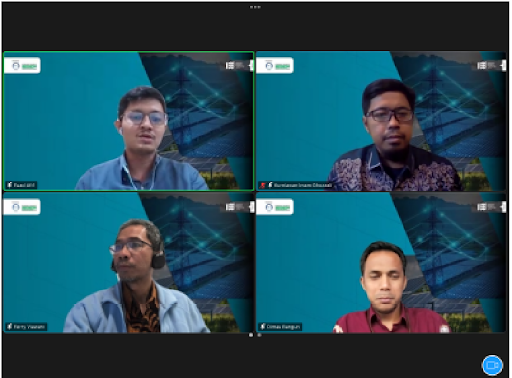
Indonesia continues to accelerate its transition toward a cleaner and more sustainable energy system. As the use of Rooftop Solar Power (PLTS) increases, Battery Energy Storage Systems (BESS) have become an important technology to maintain the stability and reliability of the electricity grid. The role of BESS in supporting renewable energy integration was one of the main topics discussed during PJCI Energy Talk Series Vol. 23, which brought together experts from government, utilities, industry, and academia to share their knowledge and experiences. 

One of the keynote presentations was delivered by Dr. Kevin Marojahan through the session "The Strategic Role of BESS in Accelerating Rooftop Solar Integration and Indonesia's Energy Transition." The presentation explained that solar energy depends on sunlight and weather conditions, making electricity generation variable throughout the day. BESS provides a solution by storing excess electricity when solar production is high and supplying it when demand increases. Besides improving grid flexibility, BESS also supports frequency regulation, peak load management, power quality, and overall system reliability. 

 Keynote presentation on the strategic role of Battery Energy Storage Systems (BESS) in supporting rooftop solar integration and Indonesia's energy transition. 

Throughout the event, the discussions highlighted that the energy transition requires not only more renewable energy generation but also a smarter electricity system. PT PLN (Persero) presented its strategy to develop Smart Grid technology, expand renewable energy, and deploy Battery Energy Storage Systems to improve grid flexibility and reliability. The discussions also introduced Home Energy Management Systems (HEMS), which combine rooftop solar, batteries, and smart monitoring systems to help consumers manage electricity use more efficiently while increasing energy independence. 

Another important topic was the potential use of second-life electric vehicle (EV) batteries as energy storage for rooftop solar systems. Reusing EV batteries before recycling can extend battery life, reduce environmental impact, and provide a more affordable energy storage solution. International experience from Australia also showed how residential battery systems help manage rooftop solar generation, reduce electricity costs, and support grid stability through Virtual Power Plants (VPPs). 

PJCI Energy Talk Series Vol. 23 demonstrated that Battery Energy Storage Systems (BESS) are becoming a key technology in Indonesia's energy transition. Supported by Smart Grid development, rooftop solar integration, second-life EV batteries, and collaboration between government, industry, researchers, and the community, BESS will help build a cleaner, more reliable, and sustainable electricity system for the future.

Article contributed by  Perkumpulan Prakarsa Jaringan Cerdas (PJCI), Indonesia

Smart Grid Update

Changing Public Sentiment Towards Data Centers


In my earlier article of July 2024, I had written about the “Grid Challenges and Opportunities in AI Growth”. As AI continues to expand, there is a huge global proliferation in “medium and large” (not just hyperscale) data centers near urban areas. This article examines challenges associated with such co-locations, particularly in emerging economies. 


The placement of even medium or large (not hyperscale) data centers has become a challenge for many nations, i.e. (a) land requirement (100-200 acres); (b) electrical power requirement (200-400 MW); and (c) water requirements (200-250 million gallons per year or consumption of 10,500 households in developing nations). Hyperscale data centers on the other hand being much larger need areas of 500-1,000 acres+, power demand of 700-1,000 MW+ and water requirements at 1.2-1.8 billion gallons per year. A 2025 Study by UN University has found water consumption by global AI data centers by 2030 would be equivalent to the water needs of 1.3 billion people or all of Africa.


Both very hot and very cold climates drive up these resource requirements even higher. ASHRAE guidelines recommend inlet air temperatures between 18°C and 27°C for most data centers (Classes A1 to A4), requiring the use of gas heating in colder seasons. Despite improved metrics such as (a) Power Usage Effectiveness (PUE); (b) Energy Reuse Effectiveness (ERE); (c) Renewable Energy Factor (REF); (d) On-site energy Fraction (OEF); (e) Water Usage Effectiveness (WFUE); (f) Cooling Efficiency Ratio (CER); (g) Carbon Usage Effectiveness (CUE); and others, the input resource (electricity, water, gas) requirement is still massive for a given data center.


The AI edge is sought after globally, and data centers offer this prerequisite infrastructure. National governments want it due to leading technology, regional competitive edge and national data repository. Utilities want it as it allows for increased energy sales (electrical, gas and water). States (Provinces) want it as it creates economic activity that feeds into quality education. Municipalities like it as it enables land development and increased taxes. Even the average citizen likes it (albeit initially) as it brings promise of quality jobs closer to their neighborhood. All in all, a good goal congruence (or so you would think). Until it begins to unravel. 


Every data center creates construction jobs (300 trades/engineering), operation jobs (40 IT) and facility maintenance jobs (25 indoor/outdoor). The new designs pack high-density server stacks which require sophisticated HVAC operations. The raised floor design adds further complexities in managing a vast array of electrical, gas, water and airducts distributed to each “hub”. Every resource is backed up with alternatives for a reliable 24/7/365 operation.


Two full years have passed with many data center projects nearing completion. Unfortunately, public enthusiasm and perceptions have changed for the negative. It appears only governments and the AI industry now want data centers. Public reaction is negative for several reasons including land acquisitions, potential electricity and gas rate hikes, and potential water shortages. NGOs are against increased natural gas being used in captive co-generation and lack of green energy progress that moved this agenda a few years ago. Even electricity, water and gas utilities now fear escalating costs and delayed completions in (a) bringing 220KV or 400KV lines; (b) large gas pipelines for captive power generation; and (c) large capacity water pipes for cooling requirements. 


The consequence of this is that large AI companies are now willing to go alone in procuring critical items directly from OEMs at premium prices just to get their projects completed. This has created multi-year wait times for the utilities for their own OEM equipment requirements (transformers, switchgear, gas turbines, etc.) for their capital improvement projects. For example, gas turbines and transformers have about a 2 year wait time.


Public dissidence against data centers is growing rapidly and appears global now in both developed and developing economies. Examples include (a) Mumbai area projects pitted against water scarcity; (b) Canadian projects (Ontario, British Columbia, Saskatchewan, Alberta) being protested due to fears of land encroachment, electricity and water needs; and (c) USA protests leading to first stage (March 2026) Congressional Bill seeking moratorium on new data centers till public AI safeguards are defined. Similar concerns are being raised in the EU as well. For example, municipal council candidates are campaigning against data centers in France.


In an article titled “Infrastructure or Intrusion? Europe’s Conflicted Data Center Expansion” authored by Raluca Besliu, Aniket Narawad and Anna Toniolo, in July 2025, they argue, that diverging responses to data centers have less to do with the technology itself and more with how it’s introduced and implemented. Public acceptance hinges on direct impact (from resource consumption to landscape transformation) and whether authorities and tech companies meaningfully engage with local communities. 


Positioning data centers as "traditional" industries might explain why many local communities initially welcomed them but later rebelled once details were known. Per Max Schulze, who analyzed data centers commissioned by Germany's federal economic ministry, “in reality, data centers do not serve local economies but are a part of a global infrastructure, operated remotely and create value far from where they are built. Most of the investments are spent on procuring ICT equipment, and except for building construction, offer limited benefits to the local economy”.


The recent pushbacks appear now to be a widening chasm between tech and citizenry and between tech vision and community goals. This represents a significant and complex challenge for both policy makers and the tech companies. Since policy does not require extensive stakeholder consultations, each data center project was decided by the proponents themselves through business negotiation. The long-term procurement of input resources (power, gas, water) was done through the current ambit of existing regulatory processes. But electricity, gas and water resource distribution are not open markets in the true sense, but rather shared public resources. And herein lies the conflict. 


In my view, implementing time-tested utility style Integrated Resource Planning (IRP) or its variant could have avoided this stand-off. The IRP process has been in vogue in utilities for over 20 years. It is a comprehensive approach to system planning that considers both traditional facilities and alternatives to meet a system need. These alternatives determine whether they can reduce, defer or avoid a traditional connection, while taking into consideration reliability, cost-effective optimization and risk management. Municipalities have their IRP for their land development and township planning. However, each agency has used IRP within their own “silo” and wavered in its strict treatment, based on changing policies and/or perceived project risks. 


The assumption that current regulatory bodies can govern such data center projects (requiring large land, gas, electricity and water services) effectively is flawed. It is time that infrastructures of national priority be subjected to IRP under a “duty to consult” public policy. Data centers may appear as private sector business ventures, but they seek vital resources that are publicly shared. Traditional IRP processes will slow down data center projects, so an expedited version is required to enable this new industry. 


Without public participation such large projects will always be viewed as meeting partisan political objectives and less about stated national objectives. 


Article contributed by Ravi Seethapathy, GSEF Ambassador for Americas

Smart Grid Events

Upcoming Smart Grid Events

NAME OF THE EVENT

DATE

WEBSITE

CIGRE, PARIS SESSION 2026, PALAIS DES CONGRÈS, PARIS, FRANCE

23rd - 28th August, 2026

https://session.cigre.org/

MIDDLE EAST ENERGY DUBAI WORLD TRADE CENTRE,
DUBAI

01st - 03rd September, 2026

https://www.middleeast-energy.com/en/

home.html

ENLIT ASIA
ICE, BSD CITY, JAKARTA, INDONESIA

22nd -24th September 2026


https://www.enlit-asia.com/


17TH CLEAN ENERGY MINISTERIAL (CEM17), OCTOBER 2026,
RIYADH, KINGDOM OF SAUDI ARABIA

11th - 13th OCTOBER, 2026

https://www.cleanenergyministerial.org/


18TH LATIN AMERCIAN SMART GRID FORUM,
SAO PAULO, BRAZIL

6th -7th October, 2026

www. Smartgrid.com.br/eng


25th WPC ENERGY CONGRESS, RIYADH, KINGDOM OF SAUDI ARABIA

11th -15th October, 2026

https://wwwwpcenergy.org

DUM INDIA
 JAIPUR, RAJASTHAN, INDIA


27th -28th October, 2026

www.dumindia.in

FUTURE POWER EXPO RIYADH FRONT EXHIBITION & CONFERENCE CENTER ADIPEC, ABU DHABI, UNITED ARAB EMIRATES

02nd – 05th November, 2026

https://www.adipec.com/


ADIPEC 2026, ABU DHABI, UAE

02nd – 05th November, 2026

Adipec.com


COP 31- UN CLIMATE CHANGE CONFERENCE,

ANTALYA, TÜRKIYE

09th- 20th November, 2026

https://unfccc.int/cop31


ENLIT EUROPE

VIENNA, AUSTRIA

10th -12th November, 2026

https://www.enlit-europe.com/


← Back to newsletters